Politics of Qatar
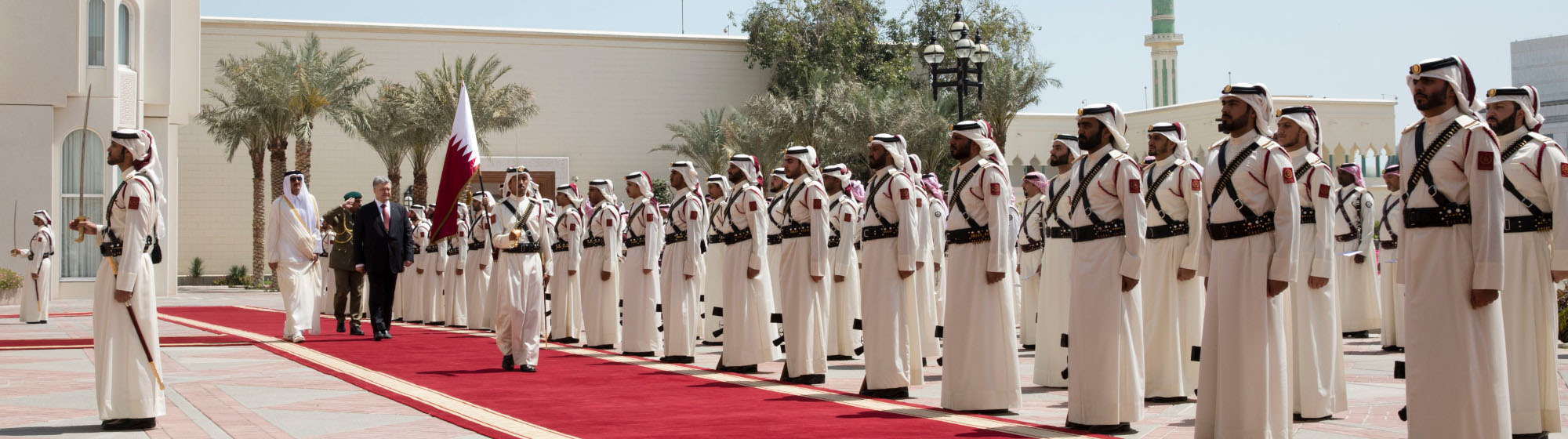
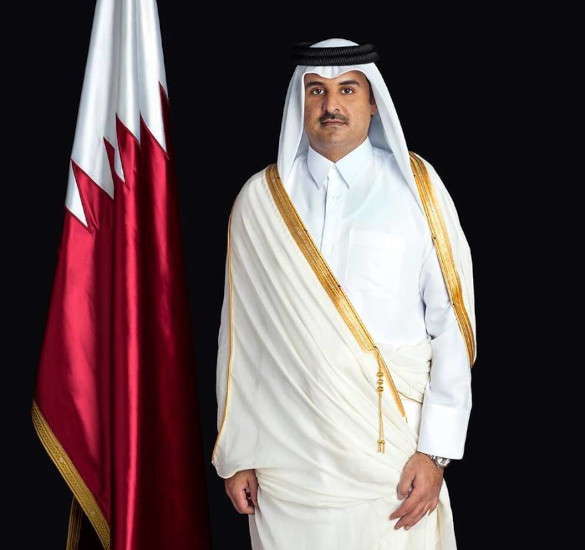
Since 2013, the Head of State has been His Highness Sheikh Tamim bin Hamad AL THANI, Amir of the State of Qatar. The current Prime Minister is His Excellency Sheikh Mohammed bin Abdulrahman bin Jassim AL THANI, appointed in March 2023.
Qatar
- Official name: State of Qatar
- Political system: Constitutional hereditary Monarchy (Emirate)
- Head of State: His Highness Sheikh Tamim bin Hamad AL THANI, Amir of the State of Qatar
- Prime Minister: His Excellency Sheikh Mohammed bin Abdulrahman bin Jassim AL THANI
- Capital: Doha
- Independence date: 3 September 1971
- Legislative body: Shura Council
- Population: 2,716,000 inhabitants (2023) – Qatari
- Official language: Arabic
A Constitutional Hereditary Monarchy
Qatar’s political system is based on the principle of the separation of powers. The Amir is the Head of State, Commander-in-Chief of the Armed Forces, and represents Qatar both internally and internationally. Executive authority is exercised by the Amir, with the support of the Council of Ministers, as provided by the Constitution.
The Council of Ministers, also referred to as the Cabinet, is responsible for implementing government policy and managing the work of ministries and public institutions. Its formation is established by Amiri Order on the proposal of the Prime Minister.
The Role of the Amir and the Government
The Amir holds a central role in Qatar’s political system. He appoints the Prime Minister and ministers, ratifies laws, represents the State in foreign relations and oversees the general direction of national policy.
The Prime Minister leads the work of the government and coordinates the activity of the ministries. The current Prime Minister, Sheikh Mohammed bin Abdulrahman bin Jassim AL THANI, also serves as Minister of Foreign Affairs, reflecting Qatar’s active diplomatic role in regional and international affairs.
The Shura Council
The Shura Council is Qatar’s legislative body. Under the Constitution, it is responsible for legislative authority, approving the general policy of the government and the State budget, and exercising oversight over the executive authority within the limits defined by the Constitution.
Following the constitutional amendments approved in 2024, the Shura Council consists of no fewer than 45 members, appointed by Amiri Decision.
Legal and Judicial System
Judicial authority in Qatar is exercised by the courts in accordance with the Constitution. Court rulings are issued in the name of the Amir, and the judiciary forms one of the main branches of the State’s institutional framework.
Qatar’s legal system combines civil law principles with elements inspired by Islamic law, particularly in personal status matters.
Qatar's International Role
Qatar has developed an active foreign policy and plays a growing role in regional diplomacy, international cooperation and mediation. Its strategic location in the Gulf, strong economy and diplomatic engagement have contributed to its position as an influential actor in the Middle East.
The country has forged strategic bilateral relationships with several foreign powers and is also a member of several regional and international organisations including:
- The United Nations (UN) and its six main Committees
- The United Nations Human Rights Council (UNHRC)
- The Organisation of Petroleum Exporting Countries (OPEC)
- The Organisation of Arab Oil Exporting Countries (OAPEC)
- The Arab League
- The World Trade Organisation (WTO)
- The International Monetary Fund (IMF)
- The World Bank
- The World Intellectual Property Organisation (WIPO)
- The Organisation of Islamic Cooperation (OIC)
- The Gulf Cooperation Council (GCC) with Bahrain, Kuwait, Oman, Saudi Arabia, and the UAE
- The Council of Arab Economic Unity (CAEU)
- The UNESCO World Heritage Committee
- The World Customs Organization (WCO)
- Interpol (International Criminal Police Organisation)
- The World Health Organization (WHO)
- The United Nations Conference on Trade and Development (UNCTAD)