Geography of Qatar
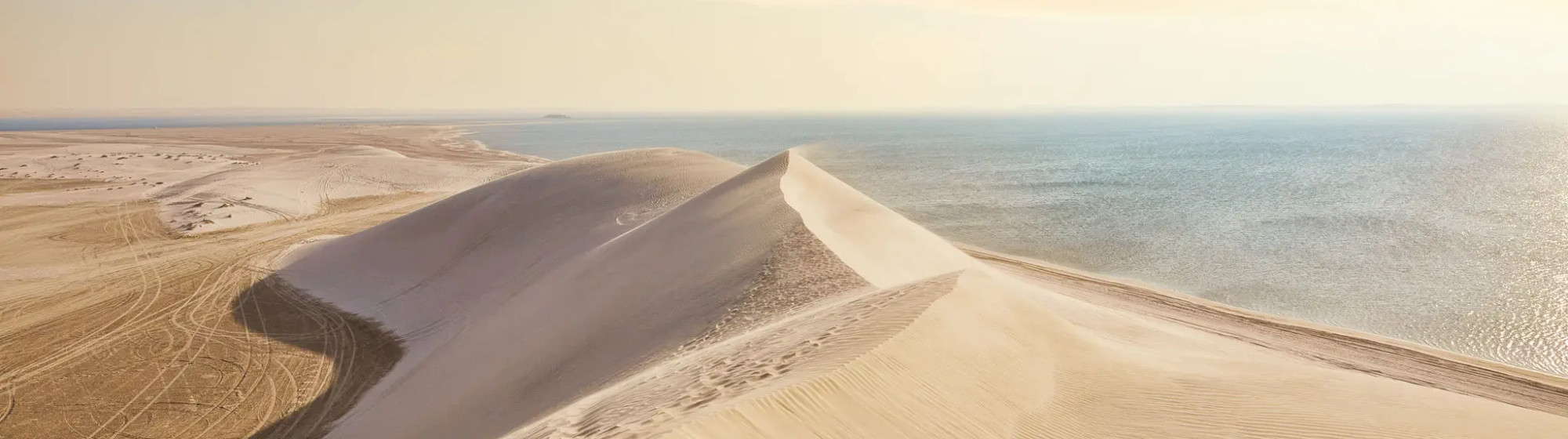
Its geography is characterised by flat desert landscapes, coastal areas and urban developments concentrated mainly around Doha and the eastern coastline.
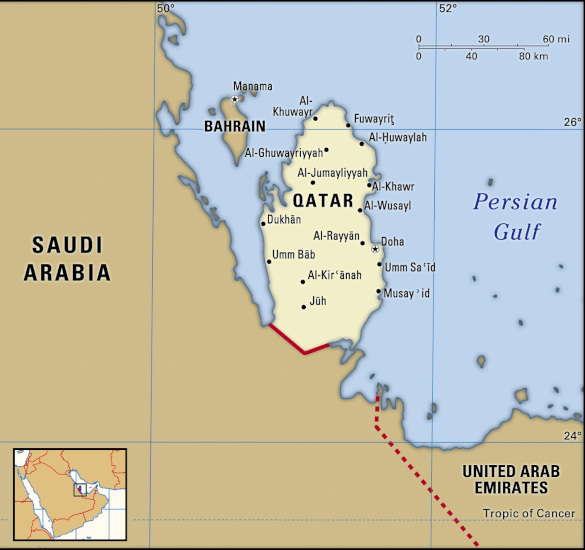
Qatar Geographic Key Fact
- Official name: State of Qatar
- Capital: Doha
- Area: 11,586 square kilometres
- Population (2024, World Bank): 2,857,822 inhabitants - Qataris
- Geographical location: Arabian Peninsula – Middle East
- Land border: Saudi Arabia (87 km)
- Coastline: Approx. 563 km along the Arabian Gulf
- Climate: Desert climate with hot summers and mild winters
- Highest point: Qurayn Abu al Bawl (103 metres)
- Main cities: Al Rayyan, Al Wakrah, Al Khor, Umm Salal
A Peninsula in the Arabian Gulf
Qatar is a peninsula extending approximately 160 km in length and 80 km at its widest point. The country shares its only land border with Saudi Arabia to the south and is surrounded by the waters of the Arabian Gulf. Its continuous coastline has historically played an important role in trade, fishing and pearl diving activities.
The country’s territory consists mainly of low limestone plains and desert landscapes, with very limited mountainous relief. The highest natural point in Qatar reaches just over 100 metres above sea level, while the Khor Al Adaid Inland Sea lies in the southeast of the peninsula.
Although much of the country is arid with limited vegetation, coastal zones and urban areas have experienced major development over recent decades, transforming Qatar into a modern and highly connected destination.
A Mainly Desert Climate
Qatar experiences a desert climate, characterised by long, hot summers and mild winters. From May to September, temperatures can regularly exceed 40°C, while winter temperatures generally range between 15°C and 25°C. Rainfall remains limited and occurs mainly during the winter months.
The most pleasant period to visit Qatar is generally between November and April, when temperatures are milder and outdoor activities are more comfortable.
Doha: the Heart of the Country
The majority of Qatar’s population lives in and around Doha, the country’s capital and economic centre.
Located on the eastern coast, Doha combines modern business districts, cultural institutions, residential areas and waterfront developments. Over recent decades, the city has undergone rapid urban expansion, supported by major investments in infrastructure, transport and tourism.
The modern metro network and road infrastructure make it easy to move between business, cultural and leisure districts.
Doha is home to key landmarks such as:
- The Corniche
- Souq Waqif
- West Bay
- The Pearl-Qatar
- Msheireb Downtown Doha
- Katara Cultural Village
Natural Landscapes and Environment
Although Qatar is primarily known for its urban development, the country also offers a variety of natural environments.
Visitors can discover:
- Desert dunes and inland desert landscapes
- Coastal beaches and mangroves
- Inland sea areas such as Khor Al Adaid, recognised by UNESCO for its unique natural ecosystem
- Marine biodiversity along the Gulf coastline
Desert excursions, dune driving and outdoor activities are popular experiences for visitors exploring the country beyond Doha.
Urban Development and Infrastructure
Qatar has invested heavily in modern infrastructure and urban planning. The country now benefits from
- Modern highways and road networks
- Hamad International Airport
- Doha Metro
- International-standard hotels and convention centres
- Smart city and sustainable development projects
These developments have strengthened Qatar’s role as a regional hub for tourism, business and international events.
A Strategic Location in the Middle East
Qatar’s geographic position gives the country an important strategic role within the Gulf region and the wider Middle East.
Its accessibility, modern infrastructure and international connectivity make it a key destination for global conferences, exhibitions and business travel, while its landscapes and coastline continue to attract international visitors seeking cultural and leisure experiences.