
Artificial Intelligence and Trust: Securing Critical Technologies for Milipol Qatar 2026
A Current Context that Demands Trust
In January 2026, at the World Economic Forum in Davos, the CEOs of Microsoft, Google DeepMind, and Anthropic shared their visions for AI while expressing concerns about the risks of its rapid deployment. According to Libération: “Invited in majesty to the World Economic Forum, these leaders defended the unchecked rollout of their technologies without having to address the social and environmental questions they raise.” Siecle Digital also notes that “AI is scaling up and shifting its discourse, emerging as a lever of global power.”
These developments confirm that the greatest challenge of AI is not just its innovation potential, but the need to ensure its security and reliability. Without robust infrastructure and effective controls, AI systems can become sources of risk for organizations and states, compromising sensitive data and critical infrastructure. This context illustrates why trust in AI through transparency, explainability, and accountability remains a strategic imperative for domestic security, both in Qatar and globally.
Transparency and Explainability: the Foundation of AI Adoption
In sensitive environments as counter-terrorism, organized crime, forensic analysis, or critical infrastructure protection AI cannot remain a “black box.” Transparency regarding data usage, system design, and limitations is essential to ensure compliance, ethics, and operational confidence.
As Major General Nasser bin Fahad AL THANI, Chairman of the Milipol Qatar Committee, emphasized: “Harnessing advanced technologies is essential to meet the growing complexity of security challenges. Milipol Qatar provides a platform for international collaboration and strategic dialogue on the future of security.”
Explainable AI enables operators to understand and justify decisions, reinforcing human accountability and improving real-time responses.
Governance and Accountability: Pillars of Sustainable Security
As AI becomes integrated into security architectures, clear governance frameworks are essential. Responsibility must be defined throughout the technology lifecycle: design, procurement, deployment, and ongoing oversight.


Milipol Qatar 2026: A Strategic Platform
With over 14,500 visitors, 360 official delegates, and 255 exhibitors from 26 countries in 2024, Milipol Qatar has established itself as the reference event in the Middle East. The 2026 edition will allow security professionals to:
- Explore trusted AI solutions for protecting critical infrastructure and high-traffic locations
- Exchange best practices on governance and explainability
- Anticipate emerging threats highlighted at global forums such as Davos 2026.
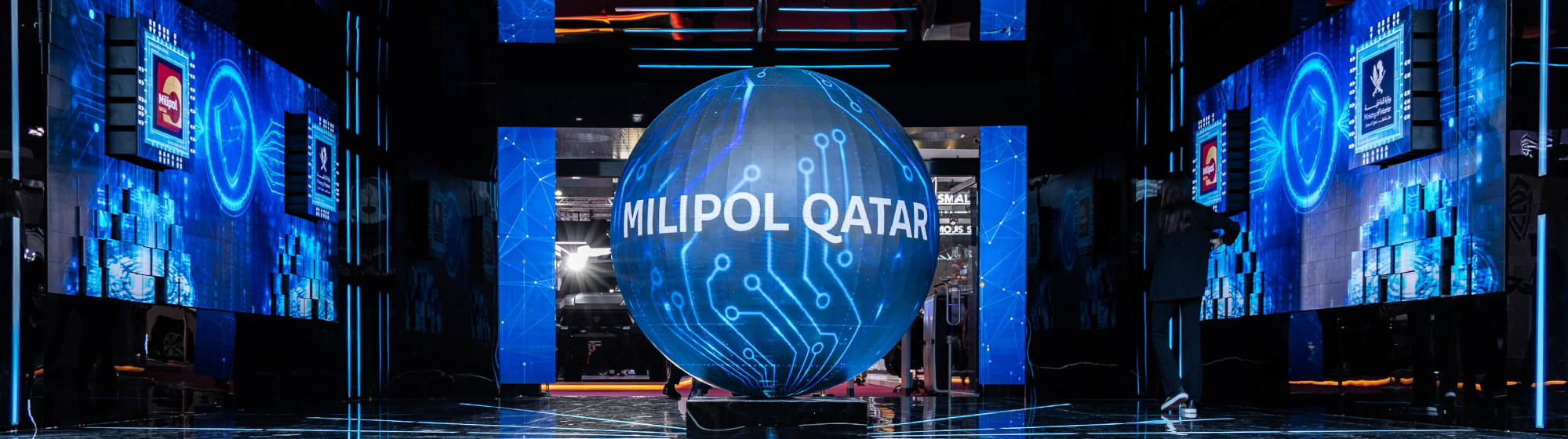
By placing trust at the heart of innovation, Milipol Qatar 2026 reinforces its role as a strategic platform for next-generation homeland security solutions.